Easy No-Cook Camping Meals
No-cook camp meal ideas by time of day, a sample two-night menu, and the USDA cold-food rules for perishable foods.
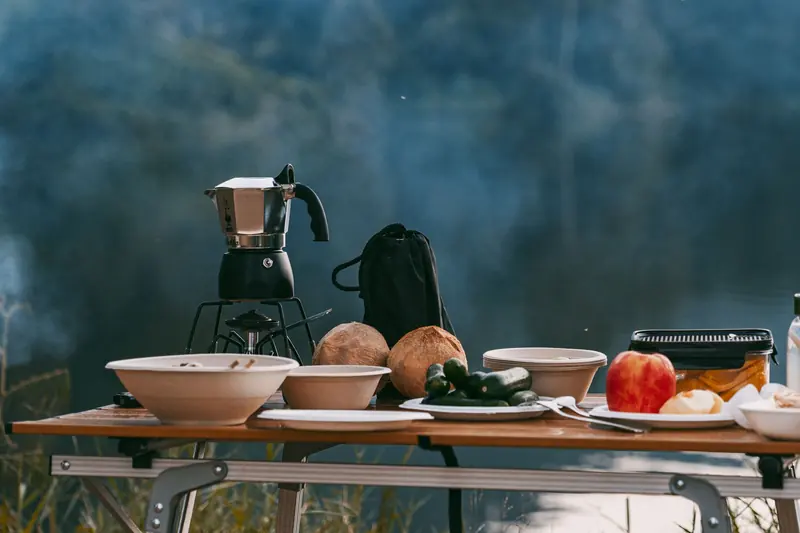
On this page
Some camp meals should not involve a flame at all. You arrive after dark with a tired child. A fire ban starts the week you leave. It rains, the wind picks up, or you simply do not want to wash a pot after a long drive. A short list of no-cook meals turns those moments from a problem into a plan.
No-cook does not mean no-risk. Sandwiches, cheese, yogurt and deli meats are perishable, and perishable food is the part of a camping menu that can make people sick if it warms up. This guide sorts no-cook food into shelf-stable and cold-box groups, gives ideas for every part of the day, and explains the food safety rules from the U.S. Department of Agriculture (USDA). It names no brands and includes no recipes that depend on special products.
Two groups: shelf-stable and cold-box
Shelf-stable food does not need to stay cold. The USDA’s camping page lists examples: pre-packaged shelf-stable meals, peanut butter in plastic jars, canned tuna, ham, chicken and beef, beef jerky and other shelf-stable meats, whole or dried fruits, nuts, and powdered milk. It also says canned goods are safe but heavy.
Cold-box food needs a cooler and a cold source. For a day trip, the USDA says just about anything works if it fits in your pack and stays cold, and names sandwiches, bread and cheese, and salads as examples.
| Meal | Shelf-stable ideas | Cold-box ideas |
|---|---|---|
| Breakfast | Granola or cereal with powdered milk, nut butter on tortillas, dried fruit, nuts | Yogurt, cheese, sliced fruit, a bagel with a spread |
| Lunch | Canned tuna or chicken with crackers, peanut butter sandwiches, jerky, whole fruit | Sandwiches, bread and cheese, wraps with sliced meat, a salad |
| Dinner | Canned beans with tortillas and chips, canned fish with crackers, nuts and dried fruit | Pasta salad made at home, cold sandwiches, wraps |
| Snacks | Trail mix, crackers, granola bars, whole fruit | Cheese sticks, cut vegetables, hummus |
Read the label on any pre-packaged shelf-stable meal to see how it is meant to be prepared before you count it as a no-cook option.
Cold-food safety rules that matter at camp
Bacteria grow most rapidly between 40°F (4°C) and 140°F (60°C), according to the USDA, and can double in number in as little as 20 minutes. That range is called the Danger Zone. The USDA’s rules for staying out of it are simple:
- Never leave food out of refrigeration for more than 2 hours. If the temperature is above 90°F (32°C), the limit is 1 hour.
- Keep cold food cold: at or below 40°F (4°C). FoodSafety.gov suggests keeping an appliance thermometer in the cooler to check.
- Keep raw foods separate from other foods, and do not use the same platter or utensils for raw and cooked meat.
- Wash your hands with soap and water before and after handling food, or use hand sanitizer with at least 60% alcohol or disposable wipes.
- If the cooler no longer has ice, discard leftover food. Do not bring perishable meat or poultry without a cold source.
Packing a cooler explains how to build a cooler that holds those numbers.
A sample two-night no-cook menu
This menu is for two adults and one child, from Friday dinner to Sunday breakfast. Eat the most perishable items first, as the National Park Service advises, and save shelf-stable items for later.
- Friday dinner: Sandwiches made at home and kept cold, with whole fruit.
- Saturday breakfast: Nut butter and sliced fruit on tortillas, with nuts.
- Saturday lunch: Wraps with canned chicken or beans, crackers and cut vegetables.
- Saturday dinner: Canned beans, tortilla chips, cheese from the cooler and a jar of sauce, with any remaining fruit.
- Sunday breakfast: Cereal or granola with powdered milk, and dried fruit.
To size the menu, use the grid method in camping meal planning for beginners. Add one backup meal, such as a nut butter sandwich, that needs no cooler.
Make no-cook meals easier
- Prep at home. Slice, portion and bag foods before the trip. The National Park Service says airtight bags, containers and coolers keep food fresh and limit odors that attract wildlife.
- Pack by order of use. The USDA says first foods packed should be the last foods used.
- Pack small amounts. The USDA suggests taking foods in the smallest quantity needed, such as a small jar of mayonnaise.
- Plan for the fire situation. If a fire is banned, no-cook meals keep dinner on schedule. See campfire rules and fire restrictions.
- Store smelly foods properly. Tuna, nut butter and cheese are food. Follow the rule in food storage at the campsite.
- Keep cleanup small. Use plates and a cutting board you can wipe or wash quickly. Cleaning up after camp meals covers dishes and trash.
For trips in bear country, the National Park Service lists compact, low-odor foods such as tortillas, jerky, nuts, dried fruit, peanut butter and protein bars. That list is written for backcountry trips, but it works as a menu starting point for any no-cook plan.
Common mistakes
- Assuming no-cook means no cooler. Cheese, deli meat, yogurt and salads need a cold source.
- Leaving lunch on the picnic table. The limit is 2 hours, or 1 hour above 90°F (32°C).
- Packing only snacks. Plan real meals, with protein and variety.
- Forgetting tools. Bring a can opener, a knife and a cutting board.
- Skipping hand cleaning. Pack soap, water or sanitizer with at least 60% alcohol.
- Leaving food out at night. Store it according to the campground’s rule.
Frequently asked questions
How long can a sandwich sit out at camp?
No more than 2 hours, or 1 hour if the temperature is above 90°F (32°C), according to the USDA. After that, discard it.
Do you need a cooler for no-cook meals?
Only if you bring perishable foods. A menu made entirely of shelf-stable items, such as nut butter, canned fish, crackers, nuts and dried fruit, does not need one.
What is a good no-cook meal for the first night?
Anything you prepared at home and kept cold, such as sandwiches or a pasta salad. Perishable food should be eaten first.
Can you rely only on shelf-stable food for a weekend?
Yes, for a short trip. The USDA lists many shelf-stable choices. Add variety so the group does not get bored by day two.
Next step: add two no-cook meals to your plan
Pick one no-cook breakfast and one no-cook dinner and add them to the Pitch & Pack Planner. They are your backup if the stove or the weather fails. Then set up the rest of your camp kitchen.
Sources
Official pages used for this guide. Rules vary by place and change often, so check the page for your campground before you go.
- Food Safety While Hiking, Camping and Boating, U.S. Department of Agriculture, Food Safety and Inspection Service. Accessed November 6, 2026.
- "Danger Zone" (40°F - 140°F), U.S. Department of Agriculture, Food Safety and Inspection Service. Accessed November 6, 2026.
- Keep Food "Cool for the Summer" to Avoid Foodborne Illness, FoodSafety.gov. Accessed November 6, 2026.
- Cooking in Camp, National Park Service. Accessed November 6, 2026.
- Storing Food in Bear Country, National Park Service. Accessed November 6, 2026.
Keep reading
Camp Cooking and Campfires
Packing a Cooler: Food Safety on a Camping Trip
Pack a cooler the USDA way: cold sources, packing order, raw meat placement, a thermometer and the 40°F (4°C) rule.
Camp Cooking and Campfires
Cleaning Up After Camp Meals: Dishes and Trash
How to wash dishes, strain and dispose of dishwater, and handle scraps and trash at camp, with the rules that change by campground.
Camp Cooking and Campfires
Firewood Rules at Campgrounds: Buy It Where You Burn It
Why campers should not carry firewood, how far is too far, what heat-treated wood means and when gathering is allowed.