Camp Kitchen Setup: What You Actually Need
Where to put your camp kitchen, the short list of gear you need, and how to handle water, hand washing and cleanup.
On this page
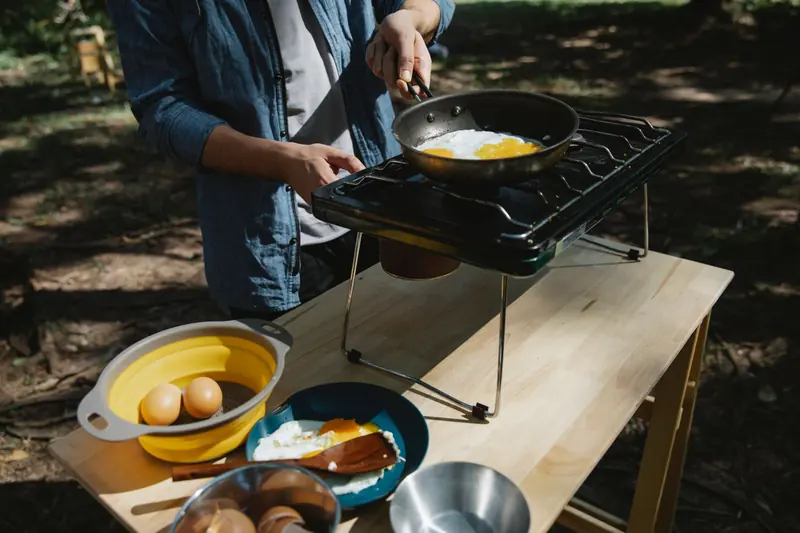
A first camp kitchen can go wrong in two ways. You pack a full home kitchen into the car, or you arrive with a stove and nothing to cook in, wash with or set it on. A camp kitchen is not a room. It is a small work area with five jobs: heat food, prep it, serve it, keep it safe and clean up afterward.
This guide helps you build that work area around one campsite picnic table. You will see the short list of gear that earns its space, how to plan water, where hand washing fits, and how to sort everything into bins so dinner does not turn into a search. It does not repeat the details covered elsewhere. For stove choices, read camp stove types for beginners. For menus, see camping meal planning for beginners.
Build the kitchen around the picnic table
NPS says cooking at a frontcountry campground takes place at the picnic table and the fire ring or grate, and that you should set the area up so you have room to work. Recreation.gov adds a practical check: confirm that your site has a picnic table, and bring a table for food prep if it does not.
NPS also says to walk the site and choose separate spots for your tent, your cooking station and your eating station, since keeping the three apart makes the area safer and more comfortable. The wider layout is in how to set up a campsite. In bear country, NPS says to keep 200 feet (61 m) between a cooking space and a sleeping space and to follow the park’s food storage rules. Many parks require a bear box or bag.
A simple zone plan works at almost any site:
- Prep end of the table: cutting board, knife, bowls.
- Cooking end: stove or grate, pot, utensils within reach, lighter stored safely.
- Wash station: a few steps away, on the ground or a second surface.
- Trash and recycling: one closed bag, kept off the table.
The short list of gear you actually need
| Job | What to bring | Note |
|---|---|---|
| Heat | A stove with the right fuel, plus a lighter or matches | NPS says to test the stove and check you have the right fuel |
| Cook | One or two pots or a skillet, a lid, tongs or a flipper, a spoon | One-pot meals mean less to carry and clean, says NPS |
| Prep | A knife, cutting board and one mixing bowl | Wash hands before you start |
| Eat | Plates, cups and silverware | Match the count to your group |
| Wash | Three basins, biodegradable soap, a scouring pad, paper towels or rags | NPS describes a three-basin wash setup |
| Water | A jug for the site plus personal bottles | See the water section below |
| Store | Sealed bags and containers, a cooler | See packing a cooler |
| Trash | Heavy bags and a way to close them | Pack out what you pack in |
That is the whole list for a weekend of car camping. NPS notes that backpacking versions of these items are smaller and lighter, and that a mess kit packs a plate, skillet, small pot and cup into one set. For fire cooking, the rules come first, so read campfire rules and fire restrictions explained before you pack a grate.
Plan the water
NPS calls water the most important survival need, and gives a rule of thumb: drink 2 liters of water a day or more, especially in very hot climates. It adds that you need water to drink, cook and clean, and that filling a jug is one of the first jobs when you reach a frontcountry campground.
Two adults on a two-night trip. Drinking alone, NPS’s rule of thumb works out to about 4 liters (1 gallon) per day for the pair. Cooking and cleaning need more on top of that. If the campground has no tap, bring that total from home.
Check what the campground offers before you leave. NPS says frontcountry campgrounds often have spigots with drinking water, but primitive campgrounds may have only non-potable water, or none. In the backcountry, NPS says to filter, purify or boil water before you drink or cook with it.
Wash hands, clean up and handle trash
NPS says to wash your hands before touching food and after handling raw meat, and it suggests food-grade gloves. The Centers for Disease Control and Prevention (CDC) lists preparing food as a key time to wash, and says to scrub for at least 20 seconds. Soap and water come first. If they are not available, CDC says to use a hand sanitizer with at least 60% alcohol, and not on hands that are visibly dirty or greasy, such as after camping.
Set up a hand-wash spot before the first meal: a jug with a spout, soap and a towel. The full dish routine is in cleaning up after camp meals. In short, NPS describes three bins for washing, rinsing and a final step, then air drying.
For trash, NPS says to flatten packaging, reuse sealable bags as waste bags, and check the picnic table, fire ring and ground for scraps. Clean up right after the meal, because food left out draws insects and animals. NPS also says never to feed wildlife. See pack it in, pack it out.
Sort the kitchen into bins
NPS says a little organization goes a long way, and that the supplies you need should be accessible. Pack by job, not by item:
- Cooking bin: stove, fuel, pots, utensils, lighter
- Dry-food bin with a lid, for the foods that do not need cold
- Wash bin: basins, soap, rags, a towel
- Cooler, packed separately and opened as little as possible
- A trash bag and a spare, kept outside the bins
Keep all food stored away from rodents and other wildlife. NPS says to check the park’s food storage rules, since many require boxes or bags. The details are in camping food storage.
Common mistakes
- Testing nothing. NPS says to try new stoves before the trip, since they can be hard to start or have broken parts.
- Packing too many pots. One or two is the NPS list.
- Forgetting water. The campground may have no tap.
- Cooking next to the tent. NPS says to keep a safe distance between the tent and the cooking station.
- Leaving food out between meals. It attracts animals and insects.
- Skipping the hand-wash spot. Hands get the most use and the least attention.
Frequently asked questions
Do you need a table for a camp kitchen?
Most frontcountry sites have a picnic table. Recreation.gov says to check the site details and bring a table for food prep if there is none.
How many pots and pans do you need?
NPS lists one or two pots or skillets for a basic camp kitchen. One-pot meals reduce what you carry and clean.
Is hand sanitizer enough for the camp kitchen?
Soap and water are the better choice. CDC says sanitizer with at least 60% alcohol is a backup, and it does not work as well on visibly dirty or greasy hands.
Where should you cook in bear country?
Follow the park’s rules. NPS says to keep 200 feet (61 m) between cooking and sleeping spaces in bear country, and many parks require food in boxes or bags. See wildlife at the campsite.
Next step: build your checklist
Open the Planner, choose how you plan to cook, and it builds a kitchen list for your group. Pack one practice meal at home first to see what is missing.
Sources
Official pages used for this guide. Rules vary by place and change often, so check the page for your campground before you go.
- Cooking in Camp, National Park Service. Accessed November 6, 2026.
- What to Bring, National Park Service. Accessed November 6, 2026.
- Frontcountry Camping, National Park Service. Accessed November 6, 2026.
- Finding and Setting Up a Campsite, National Park Service. Accessed November 6, 2026.
- Bear Safety: Storing Food, National Park Service. Accessed November 6, 2026.
- Before the Trip (camp safety), National Park Service. Accessed November 6, 2026.
- About Handwashing, Centers for Disease Control and Prevention. Accessed November 6, 2026.
- Hand Sanitizer Guidelines and Recommendations, Centers for Disease Control and Prevention. Accessed November 6, 2026.
- Ten Tips for First-Time Tent Campers, Recreation.gov. Accessed November 6, 2026.
Keep reading
Gear and Camp Setup
How to Layer Clothes for Camping
A simple base, insulation and shell system for camp days and nights, plus what to pack and what to avoid.
Gear and Camp Setup
Camp Lighting: Lanterns, Headlamps and Good Habits
Headlamps, lanterns and tent lights explained, plus red light, spare batteries and courteous habits after dark.
Gear and Camp Setup
How to Set Up a Campsite: Where Everything Goes
Where the tent, kitchen, fire ring and food storage go on a campsite, and how to use the space well.