Safety, Weather and Leave No Trace
Tell Someone Your Plan: A Simple Trip Itinerary
A one-page trip plan for a trusted contact: what to write, who should hold it, and what they do if you are not back on time.
On this page
Almost every camping trip ends with a tired family and a cooler to unpack. A trip plan is for the rare one that does not. It is one page of plain facts, and it gives someone at home what they need if you are late and not answering your phone.
The National Park Service (NPS) calls it a Trip Plan: a written plan with your itinerary and activity details that can be shared with Search and Rescue authorities if you do not return when expected. You can write it on paper or email it. You can use the NPS template or make your own.
This article covers what to write, who should hold it, and what that person does if you are overdue. It does not cover what to do in an emergency, a medical problem or a search. NPS has an Outdoor Emergency Plan page for that, and it is listed under sources.
Who should hold your plan
NPS calls this person a Trusted Contact: someone who is not going on the trip with you. Give them the plan before you leave, on paper or by email.
A few rules from NPS:
- Not the park. Do not leave the plan with the park. NPS says the park will not accept it.
- Not required. A Trip Plan is not required to visit a national park, and it is not required to seek help in an emergency.
- Not a permit. It does not replace any permit your activity needs.
- Not a guarantee. NPS says the plan does not guarantee your safety or rescue. You are still responsible for being prepared.
NPS teaches the habit to children too. Its Junior Ranger planning page tells kids to share a completed trip plan with a person who is not going to the park, who can alert authorities if the group does not return when expected.
Pick someone who will be reachable on your return day and who will read the plan, not just save it. Tell them how you want to be contacted when you are back. If this is your first trip, build the plan alongside the rest of your prep in the first camping trip guide.
What to write
The list below follows the itinerary list on the NPS camping safety page, with a few lines added for camping: dates, campsite number, a backup plan and your contact. Copy it into a note, a document or the Planner, then fill in each line.
- Trip name, dates, park or campground, and campsite number
- Names and phone numbers of everyone in the group
- Vehicle make, model and license plate number
- Start time and starting location
- Route and planned activities, including any hike away from camp
- Backup plan if weather, closures or health change the day
- Equipment and supplies you are bringing
- Expected finish time and location, with the date you plan to be back
- The park or campground emergency phone number, to call if you do not return on schedule
- Your Trusted Contact’s name and phone number
Copy the campsite number and loop from your reservation confirmation. The Recreation.gov guide covers how reservations work.
Be specific. “Trail to the lake” can mean several routes. Write the trail name, the trailhead and the turnaround point. Use the real time you expect to finish, not a hopeful one. NPS warns that search and rescue can be slowed when the plan has incorrect information.
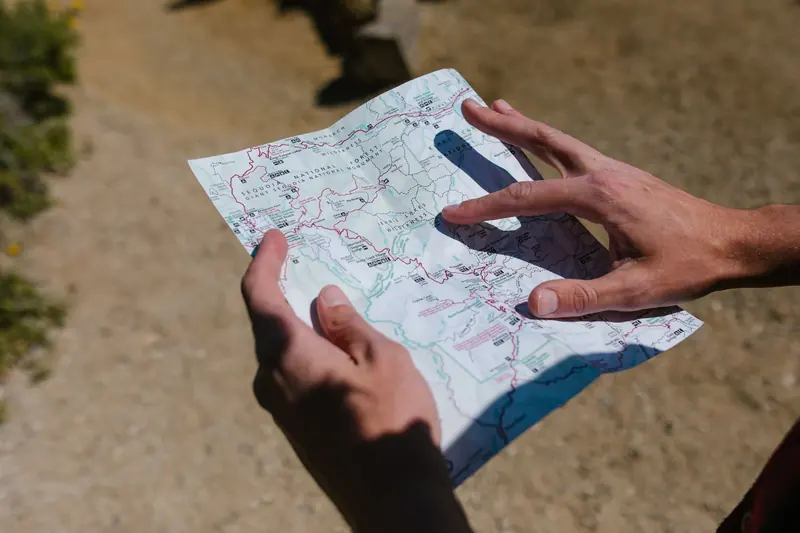
If your day includes a longer walk, add the map you are carrying. The navigation guide shows how to pick landmarks and save maps.
What your contact does if you are late
NPS gives the Trusted Contact a short script. If you do not return from your activity by the date and time in the plan:
- Try to reach you using the phone number in the plan.
- If they do not hear from you, contact authorities and share the information from your Trip Plan.
The NPS itinerary list includes the park’s emergency phone number for this reason. Look it up on the park or campground page before you leave, and write it down. Cell service may be weak, so do not rely on a search on the day. NPS reminds visitors that a phone is not a substitute for the 10 Essentials, since service may be missing and the battery may not last.
NPS also lists what slows a search: wrong information on the plan, a visitor who changes the plan, a Trusted Contact who never receives it, or one who does not contact authorities. In other words, the plan only works if everyone does their part.
Keep the plan current
A plan goes stale if your day changes. NPS asks you to do two things while you are out:
- Notify your Trusted Contact if you put your backup plan into action.
- Notify them when you complete each activity.
If you decide to go to a different trail, tell your contact first. If the forecast turns bad, check how to read a weather forecast and decide whether the original plan still makes sense. Then send the new version.
When you finish, tell your contact you are back. Otherwise they may be waiting for a call that never comes.
Common mistakes
- Giving the plan to someone on the trip. If the group is late, that person is late too.
- Leaving it with the park. NPS says the park will not accept it.
- Writing a vague route. The more detail, the more help for authorities.
- Forgetting the vehicle. Make, model and plate help find a car at a trailhead.
- Changing plans without a message. Tell your contact when you switch to the backup plan.
- Forgetting to say you are back. Close the loop.
Frequently asked questions
Do you need a trip plan for a drive-up campground?
NPS says a Trip Plan is not required to visit a national park. It does suggest one for day and overnight trips, and a short version is useful for any hike or drive away from your campsite.
Who makes a good Trusted Contact?
Someone who is not on the trip, who reads messages, and who knows what to do if you are late. NPS describes the job in two steps: try to reach you, then contact authorities.
What time should you give as your return?
Give the date and time you expect to finish, using real timing for the route and group. NPS includes expected finish time and location in the plan.
Can you send the plan by email?
Yes. NPS says the plan can be printed on paper or emailed to your Trusted Contact. Keep a copy for yourself as well.
Next step: fill it in this week
Copy the checklist into your Planner and fill in the blanks for your next trip. Send it to your Trusted Contact the day before you leave, and update it if your route changes.
Sources
Official pages used for this guide. Rules vary by place and change often, so check the page for your campground before you go.
- Trip Plan, National Park Service. Accessed November 6, 2026.
- Trip Planning Guide, National Park Service. Accessed November 6, 2026.
- Camping Safely Step 1 - Before the Trip, National Park Service. Accessed November 6, 2026.
- Outdoor Emergency Plan, National Park Service. Accessed November 6, 2026.
- Plan Your Adventure Like a Junior Ranger, National Park Service. Accessed November 6, 2026.
Keep reading
Safety, Weather and Leave No Trace
Camping With Kids: Planning for Comfort and Safety
Plan a family camping trip with comfort and safety in mind, using National Park Service pages for kids and campers.
Safety, Weather and Leave No Trace
Pack It In, Pack It Out: Trash and Waste at Camp
What to carry out, where trash and wastewater go, and how to handle human waste, based on National Park Service guidance.
Safety, Weather and Leave No Trace
Leave What You Find: Plants, Rocks and Historic Sites
Why plants, rocks and artifacts stay where they are, what the law says about historic sites, and what to do if you find an artifact.