Building a Sleep System: Bag, Pad and Pillow
How the pad, sleeping bag, pillow and sleep clothes work together, and how to match them to the forecast.
On this page
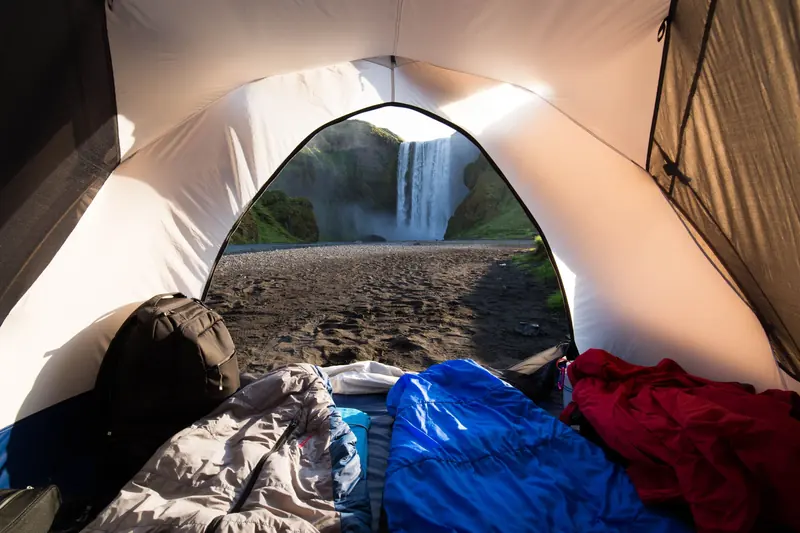
A cold, restless night can cut a first camping trip short. The tent was fine and the food was fine, but the sleeper spent hours shifting around trying to get warm. The fix is rarely one big item. It is a few simple pieces that work as a team: something under you, something over you, something under your head and dry clothes to sleep in.
Campers call this a sleep system. This guide explains what each piece does, how to pick between the common forms, and how to match the set to the forecast for your campsite. It does not give a chart that pairs bag labels with outdoor temperatures. No official source used for this guide offers one, so the maker’s label and the local forecast are your guides.
If you want to know what the night itself feels like, read what to expect on your first night camping.
The parts and what each one does
| Part | Its job | Common forms | What to check |
|---|---|---|---|
| Sleeping pad | Cushions you and blocks heat loss to the ground | Foam, air-filled, foam-and-air hybrid | Thickness, packed size, how it inflates |
| Sleeping bag or quilt | Holds the warmth your body makes | Bag with a hood, bag without, quilt | The maker’s temperature information, size |
| Pillow | Supports your head and neck | Camp pillow, stuffed pillowcase, regular pillow | Packed size |
| Sleep clothes | Keeps you warm and dry | A clean, dry top and bottoms, socks, a hat | Kept dry in a sealed bag |
| Shelter | Blocks wind and rain | Tent, see tent types explained | Right size for sleepers |
Start with the pad
Most beginners spend their effort on the bag and skip the pad. NPS has the order right: before you unroll your sleeping bag, lay down a ground pad. It cushions your body, but more importantly it keeps moisture from building up beneath you, which would rob your body of heat and leave you cold.
NPS describes three kinds. Foam pads are bulky and not terribly cushioned. Air mattresses can be more comfortable but usually need a pump or compressor to inflate. Hybrid pads, part foam and part air, offer the best of both. At a drive-up site, BLM also lists a cot as an option. The right choice depends on how far you carry it and how much cushion you want.
Choose the bag or quilt
NPS says to use a sleeping bag that fits your personal comfort needs and size, and that matches the temperature and weather conditions for your location and time of year. It also names an alternative: two or three blankets.
Match the set in three steps:
- Read the forecast for the campsite. Type the town or ZIP code of the campground into the NWS forecast page and look at the overnight low, not the daytime high. NPS notes that weather can change quickly, especially in the mountains.
- Read the maker’s label. Many labels list more than one temperature. Check how the maker defines each one and stay inside the comfortable range for your group.
- Leave a margin. Pack an extra blanket or warm clothing for chilly evenings, as BLM suggests. A spare layer is easier to add than a better bag is to buy mid-trip.
Cold nights do not have to be extreme. NWS says a freeze occurs when the temperature drops below 32°F (0°C), and that frost can develop on clear, calm nights when the air is in the mid-30s°F (about 1°C to 2°C). A night that feels mild at dusk can be a lot colder by morning.
Add a pillow and a few comforts
NPS calls a pillow a bulky luxury, even for car campers, and offers a trick: stuff a pillowcase with spare clothes. NPS also says to add earplugs to your list in case a neighbor snores, and Recreation.gov notes that nature can be louder than you would think. These are small items, and they often decide whether the night feels restful. For the quiet-hours side of this, see quiet hours and campground respect.
Set up the system in the tent
- Level the spot and clear it of sticks and stones before you pitch, as NPS advises.
- Position the tent so your head sleeps on the uphill side, per NPS.
- Lay the pad flat and inflate it before dark.
- Take the bag or quilt out of its sack and spread it out.
- Change into dry clothes before bed. NPS says you will be much more comfortable.
- Keep food out of the tent. NPS says not to store food in your tent or backpack, and to secure garbage and scented items right after you arrive.
Two habits help. First, do not pull your head inside the bag on a cold night. NPS says breathing in the bag adds moisture and makes you feel colder in the long run. Second, never take a fuel-burning heater or lantern into the tent to sleep. The Consumer Product Safety Commission says not to use portable heaters or lanterns while sleeping in enclosed areas such as tents, campers and other vehicles.
A two-night trip in spring for two adults and one child, car camping. Each person gets a pad, because the ground cools everyone, including the child. Each gets a bag chosen against the overnight low in the forecast. A stuffed pillowcase serves as a pillow. One extra blanket stays in the car for a night that turns out colder than predicted.
This guide does not cover cold-related health problems. For those, start with the Centers for Disease Control and Prevention page on preventing hypothermia, which advises dressing in several layers of loose-fitting clothing. The clothing side is in how to layer clothes for camping.
Common mistakes
- Skipping the pad. The ground pulls heat from your body. NPS puts the pad before the bag.
- Buying on the daytime forecast. Look at the overnight low.
- Sleeping in the day’s clothes. NPS says to change into dry ones before bed.
- Heating the tent with a fuel-burning device. Do not.
- Testing nothing. NPS suggests testing equipment before you go. A night in the yard shows gaps early, and backyard camping explains how.
Frequently asked questions
Do you need a sleeping pad in summer?
Plan on it. NPS says the pad cushions you and, more importantly, keeps moisture from building up under your body, which would rob you of heat. That reason does not depend on the season.
Can you use blankets instead of a sleeping bag?
NPS names two or three blankets as an alternative to a sleeping bag. They work best at a car campground where weight and packed size do not matter.
How do you choose a sleeping bag temperature rating?
Use the maker’s label and the overnight forecast for your campsite together. This site does not publish a rating chart because no official source provides one. When in doubt, pack an extra blanket or layer.
Should you pull your head inside the bag when it is cold?
NPS advises against it. Breathing inside the bag adds moisture and makes you feel colder over time.
Next step: build your checklist
Open the Planner, pick your trip type, season and group size, and it builds a checklist that includes the sleep items for your group. Then run a trial night before the trip.
Sources
Official pages used for this guide. Rules vary by place and change often, so check the page for your campground before you go.
- What to Bring, National Park Service. Accessed November 6, 2026.
- Before the Trip (camp safety), National Park Service. Accessed November 6, 2026.
- Backcountry Camping, National Park Service. Accessed November 6, 2026.
- Frontcountry Camping, National Park Service. Accessed November 6, 2026.
- Finding and Setting Up a Campsite, National Park Service. Accessed November 6, 2026.
- Local forecasts, National Weather Service. Accessed November 6, 2026.
- Cold Weather Safety, National Weather Service. Accessed November 6, 2026.
- Preventing Hypothermia, Centers for Disease Control and Prevention. Accessed November 6, 2026.
- Portable Heaters and Camping Equipment (carbon monoxide), U.S. Consumer Product Safety Commission. Accessed November 6, 2026.
- Pitch Perfect: A Beginner's Guide to Camping Adventures, Bureau of Land Management. Accessed November 6, 2026.
- Ten Tips for First-Time Tent Campers, Recreation.gov. Accessed November 6, 2026.
- Bear Safety: Storing Food, National Park Service. Accessed November 6, 2026.
Keep reading
Gear and Camp Setup
Camp Kitchen Setup: What You Actually Need
Where to put your camp kitchen, the short list of gear you need, and how to handle water, hand washing and cleanup.
Gear and Camp Setup
How to Layer Clothes for Camping
A simple base, insulation and shell system for camp days and nights, plus what to pack and what to avoid.
Gear and Camp Setup
Camp Lighting: Lanterns, Headlamps and Good Habits
Headlamps, lanterns and tent lights explained, plus red light, spare batteries and courteous habits after dark.