Backyard Camping: A Practice Run Before Your First Trip
Use one night in the yard to test the tent, stove and sleep setup, and learn what only a real campground can teach you.
On this page
The easiest place to find a mistake is your own yard. If the tent has a missing part, the stove will not light, or the sleeping pad leaks, a backyard night shows it while the house, a spare part and your own bed are a few steps away. At a campground far from home, the same problem can cost you the evening.
A practice run does not need to be fancy. Pitch the tent, cook one meal, sleep outside, and pack up in the morning. This guide lists what to test, how to run the night like a real trip, and just as important, what a yard can never teach you. The National Park Service (NPS) recommends practicing tent setup at home and says to test all equipment before the trip.
What to test in the yard
Start with the gear you plan to use. NPS says to test all equipment before the trip and to confirm you have the right components, such as the correct stove fuel or headlamp batteries. The table below turns that into a plan.
| Test | How to run it | What you learn |
|---|---|---|
| Tent | Pitch it following the maker’s instructions | Whether parts are missing and how long setup takes |
| Ground cover | Put a groundcloth or footprint under the floor | Whether it fits without extra material that could collect water |
| Stove | Light it with the fuel you plan to bring and cook one meal | Startup problems, broken parts, fuel fit |
| Sleep setup | Sleep on the pad and in the bag you will use | Comfort, warmth and whether you need a pillow |
| Light | Use the headlamp or lantern after dark | Battery condition and where you want it |
| Packing | Load the car with the full list | Whether everything fits and in what order |
The Planner has a “backyard” trip type that builds a checklist for this kind of night. Use it, then compare the result with your real-trip list to see which items the yard leaves out.
Run it like a real trip
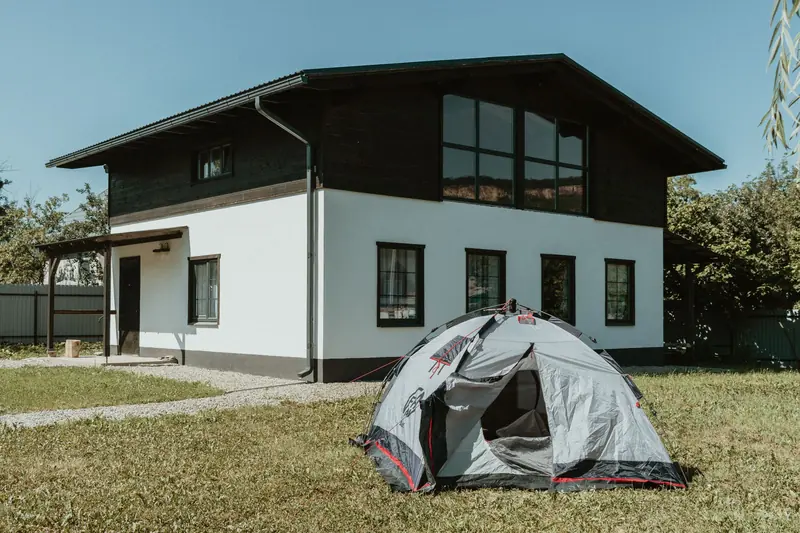
Treat the night as a dress rehearsal and follow the steps NPS gives for a campsite. Choose a large, flat spot and clear sticks, rocks and other debris. Avoid low or sunken ground, which gets very wet in rain. Use a groundcloth or footprint, or a waterproof tarp with the excess folded under so it does not collect water. NPS also suggests positioning your head on the uphill side while sleeping. The step-by-step version is in how to pitch a tent, and tent types explained helps you check the size. NPS says to size the tent for the people sleeping inside.
Cook dinner on the stove. NPS says to practice with a new stove before the trip so you can catch startup problems or broken parts. Try a one-pot meal, since NPS says any meal cooked in one pot instead of two is more efficient. Camp stove types for beginners can help you choose one, and camp kitchen setup shows what else to lay out.
Then set a timer. How long did setup take? How long did dinner and dishes take? Those numbers become your arrival plan for the real trip, and they show how much daylight you need. NPS advises making camp before dark.
Test the sleep setup
Sleep is where the yard teaches the most. NPS says a sleeping pad insulates you from ground moisture, which otherwise draws heat from your body. Foam pads are bulky, air mattresses are more comfortable but need a compressor, and hybrid pads combine both. A sleeping bag should be chosen for your size, comfort, and the expected temperature and weather. NPS adds that you can stuff a pillowcase with spare clothes to save space, and that you should change into dry clothes before bed.
Check the forecast low on the National Weather Service home page before you commit, so the night in the yard matches the temperature of the trip you are practicing for. The sleep system guide explains how to fix problems the night reveals.
What the yard cannot test
A yard is a safe place, and that is its weakness. It leaves several things out:
- Campground rules. Quiet hours, check-out times, fire rules and food storage are set by the campground or park.
- Cell service. NPS says you will not always have a cell signal at a campground.
- Wildlife and food storage. Your yard does not require a food locker or a bear-safe routine. NPS says rules differ by park.
- Ground and weather. A real site may have different ground, wind and hazards. NPS lists flash floods, lightning, wind and dead trees or branches among the things to watch when choosing a site.
- Distance and arrival. The drive, check-in and finding your site are all missing.
- Neighbors. Other campers share the space and the noise.
Plan to learn these on the real trip, and use how to plan your first camping trip to check them before you go.
Make it work for kids
A backyard night is a good way to introduce children to the routine. NPS suggests involving them in packing: ask what clothes they need for hot days and cold nights, let each child pick one or two special items, and let older kids make their own packing lists. It also suggests giving tasks that fit each child’s age and ability. Younger children can gather kindling or fill water bottles, and older children can cook, wash dishes or set up their own tents. NPS says to expect that trips often do not go as planned, so a trial run lowers the stress. See camping with kids for the full plan.
Common mistakes
- Treating it as a nap in the tent. Cook, set up and pack away as you would on a trip.
- Using different gear than you plan to bring. Test the actual stove, pad and lights.
- Skipping the forecast. A warm night proves little about a cold one.
- Retreating to the house at the first problem. Write it down and fix it instead.
- Thinking the yard covers everything. It cannot test rules, distance, wildlife or signal.
Frequently asked questions
How long should a backyard camping night last?
One night is enough to test the main pieces. Keep the schedule close to a real trip: set up in daylight, cook, sleep, and pack up in the morning.
Do you need the full gear list in the yard?
Use the gear you plan to depend on, especially the tent, stove, sleep setup and light. The Planner’s backyard trip type builds a list for this purpose.
What if the yard night goes badly?
That is the purpose of a practice run. Note what failed, replace or repair it, and run the test again before you book a campground.
Can you test a campfire in the yard?
This article does not cover backyard fires. Local rules apply, and the campground’s own fire rules are the ones that count on the trip.
Next step: run the backyard list
Open the Planner, choose the backyard trip type, and print the list. After your night in the yard, read what to expect on your first night camping to see what changes at a real campground.
Sources
Official pages used for this guide. Rules vary by place and change often, so check the page for your campground before you go.
- Finding and Setting Up a Campsite, National Park Service. Accessed November 6, 2026.
- Camping Safety: Before the Trip, National Park Service. Accessed November 6, 2026.
- What to Bring, National Park Service. Accessed November 6, 2026.
- Cooking in Camp, National Park Service. Accessed November 6, 2026.
- Camping With Kids, National Park Service. Accessed November 6, 2026.
- Frontcountry Camping, National Park Service. Accessed November 6, 2026.
- Backcountry Camping, National Park Service. Accessed November 6, 2026.
- National Weather Service, National Weather Service. Accessed November 6, 2026.
Keep reading
Camping Basics
How to Plan Your First Camping Trip
Plan your first camping trip in order: trip type, place, dates, rules, forecast, then a checklist you can tick off.
Camping Basics
Types of Camping Explained: Car, Backpacking, RV and More
Car, RV, backpacking, dispersed and backyard camping compared, with the official rules that set them apart.
Camping Basics
What to Expect on Your First Night Camping
A timeline of your first night at a campground: arrival, setup, dinner, quiet hours, a cold night and the morning.