How to Pitch a Tent Step by Step
Six simple steps to pitch a tent, plus how to choose the spot, handle wind and practice at home first.
On this page
For many first-time campers, the first pitch happens at the campsite, near dusk, with a car full of unopened bags and a child asking when dinner is. That is the wrong moment to read the instructions for the first time. Pitching a tent is simple once you have done it once, and the order of steps is almost the same for every tent.
This guide covers the tent only: where to put it, what order to follow, and how to tension it so it stays put. It does not cover the layout of the whole site, meaning where the kitchen, fire ring and food storage go. That is in how to set up a campsite. If you are still choosing a tent, read tent types explained first.
The National Park Service (NPS) says it in two sentences: setting up a tent is easier than you think, and you should practice at home so you are a pro when you visit a park.
Practice once before the trip
Recreation.gov advises a trial setup at home so you avoid spending hours working out the tent at the campsite. The Bureau of Land Management (BLM) says the same: do not wait until you arrive to figure out how to pitch it. NPS adds that if you have never camped before, a backyard test run is a good idea. The full rehearsal is in backyard camping.
During the practice pitch, keep the instructions in hand. NPS says to set the tent up according to the manufacturer’s instructions. Count the parts while you are at it.
- Tent body, rainfly and every pole section
- Stakes for each corner and each guy line loop
- Guy lines, attached or in the bag
- Groundcloth, footprint or a tarp
- Something to drive stakes, such as a mallet
- The printed or saved instructions
Choose the spot and prepare the ground
At most campgrounds the site tells you where the tent goes. NPS says some sites have a tent pad, and at sites without one it is obvious where to pitch your tent. If you camp outside a developed site, Leave No Trace guidance says good campsites are found, not made, and says to camp at least 200 feet (61 m) from lakes and streams.
Then walk the spot. NPS gives a short list for the ground:
- Pick a large, flat place and clear sticks, rocks and pinecones. They are uncomfortable and can puncture the floor.
- Avoid low, sunken ground, which can get very wet in rain.
- Orient the tent so your head sleeps on the uphill side.
- Look up. If you see dead branches overhead, do not camp under them.
- Keep a safe distance from the fire ring and cooking area. Sparks can melt holes in a tent or ignite it. NPS says tents and gear should be at least 15 feet (4.6 m) away and upwind of the fire pit.
- Keep stakes and lines out of high-traffic areas, where they become tripping hazards.
- Stay inside your own site. NPS asks campers not to set up any part of camp on a neighbor’s site.
Pitch the tent in six steps
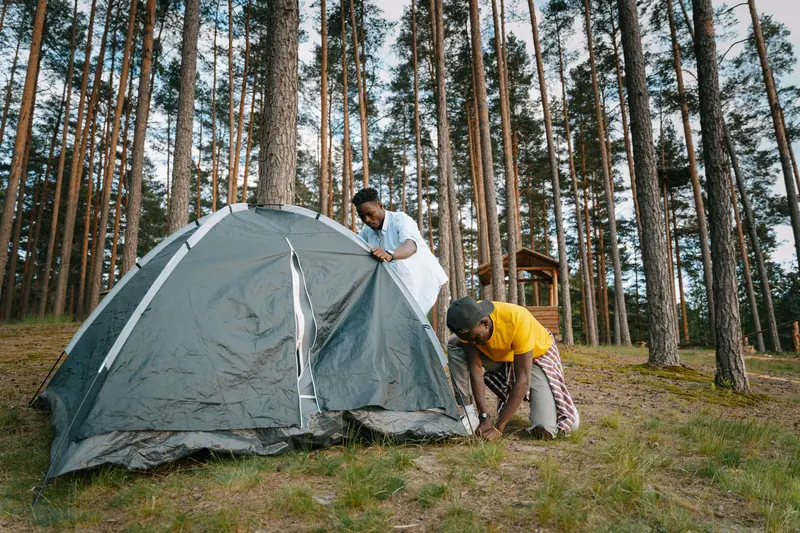
- Lay the groundcloth. NPS says a footprint or a waterproof tarp goes under the tent. With a tarp, fold any excess under, or it will collect water instead of repelling it.
- Spread out the tent body. Place the door where you want it, away from the fire ring and the main walking path. Lay the poles and stakes beside it so nothing gets lost in leaves.
- Stake the corners loosely. A loose tent body can catch the wind and roll away. NWS notes that high winds can blow objects around.
- Assemble the poles and raise the frame. Join the sections, feed or clip them as the instructions show, and flex them into place. Work in the order the maker lists.
- Add the rainfly. Drape it over the frame, line up its door with the tent door, and clip it down. Check the forecast. If rain is possible, put the fly on before you unpack.
- Stake out and tension. Drive stakes in at an angle pointing away from the tent. Tighten the guy lines until the fabric is firm and free of sags. Look again after you finish setting up camp, because fabric settles.
If a stake will not go in, move the tent a few feet inside the site. Forcing it into rock is a quick way to bend the stake.
Older kids can take real jobs. NPS says they can set up their own tents. Younger kids can hold a pole or hand you stakes. For more ideas, see camping with kids.
Wind, rain and bad ground
NWS says high winds can come from severe thunderstorms, strong weather systems, or air flowing down a mountain. It also says that when winds are sustained at 40 to 50 mph (64 to 80 km/h), isolated wind damage is possible. If the forecast shows winds near that range, change the date or the site instead of testing your stakes. How to read a weather forecast before you camp shows where to find the numbers.
NPS lists flash flooding, lightning, wind and dead trees or branches as hazards to look for around any campsite. In the backcountry, it says to stay off ledges and high peaks. Pitch before you unpack. Recreation.gov says to arrive by check-in time so you can finish before dark, rather than pitching with a headlamp.
Taking the tent down
Shake out dirt and leaves, check that every stake and pole section is in the bag, and leave no trash, food scraps or personal items behind, as NPS asks. If the tent is damp, open it at home as soon as you can. The steps are in how to clean, dry and store camping gear.
Common mistakes
- Skipping stakes on a calm evening. Wind can arrive at night.
- Pitching in a dip. It looks sheltered until it rains.
- Sleeping with your head downhill. NPS says to put it uphill.
- Letting guy lines cross the path. People trip on them, usually in the dark.
- Setting up under dead branches or close to the fire ring. NPS names both as hazards.
- Learning the pole order at dusk. Do it once at home.
Frequently asked questions
Can one person pitch a tent alone?
Usually yes with a small tent. Stake the corners first so the tent body stays put. Larger tents are easier with two people, and kids can help with simple jobs.
What if the stakes will not go into the ground?
Move to a different spot within your site. Do not dig up or reshape the ground. Leave No Trace guidance says good campsites are found, not made.
What if the campsite has no flat spot?
Read the site listing before you book, and ask the campground host or a ranger on arrival. NPS says a ranger can explain conditions and regulations, and a campsite host may help if no ranger is available.
When should you arrive to pitch in daylight?
By your check-in time. Recreation.gov says this leaves time to unpack and set up before dark.
Next step: practice, then pack
Run one practice pitch this week, then build your gear list in the Planner. It lists the shelter items for your trip type and group size.
Sources
Official pages used for this guide. Rules vary by place and change often, so check the page for your campground before you go.
- Finding and Setting Up a Campsite, National Park Service. Accessed November 6, 2026.
- Before the Trip (camp safety), National Park Service. Accessed November 6, 2026.
- Campfires, National Park Service. Accessed November 6, 2026.
- Frontcountry Camping, National Park Service. Accessed November 6, 2026.
- Camp Etiquette, National Park Service. Accessed November 6, 2026.
- Leave No Trace: The Seven Principles, National Park Service. Accessed November 6, 2026.
- Camping With Kids, National Park Service. Accessed November 6, 2026.
- Wind Safety, National Weather Service. Accessed November 6, 2026.
- Ten Tips for First-Time Tent Campers, Recreation.gov. Accessed November 6, 2026.
- Pitch Perfect: A Beginner's Guide to Camping Adventures, Bureau of Land Management. Accessed November 6, 2026.
Keep reading
Gear and Camp Setup
Building a Sleep System: Bag, Pad and Pillow
How the pad, sleeping bag, pillow and sleep clothes work together, and how to match them to the forecast.
Gear and Camp Setup
Camp Kitchen Setup: What You Actually Need
Where to put your camp kitchen, the short list of gear you need, and how to handle water, hand washing and cleanup.
Gear and Camp Setup
How to Layer Clothes for Camping
A simple base, insulation and shell system for camp days and nights, plus what to pack and what to avoid.