Dispersed Camping on BLM Land: What Beginners Should Know
What dispersed camping on BLM land means, the general rules to check, and how to find and respect a spot.
On this page
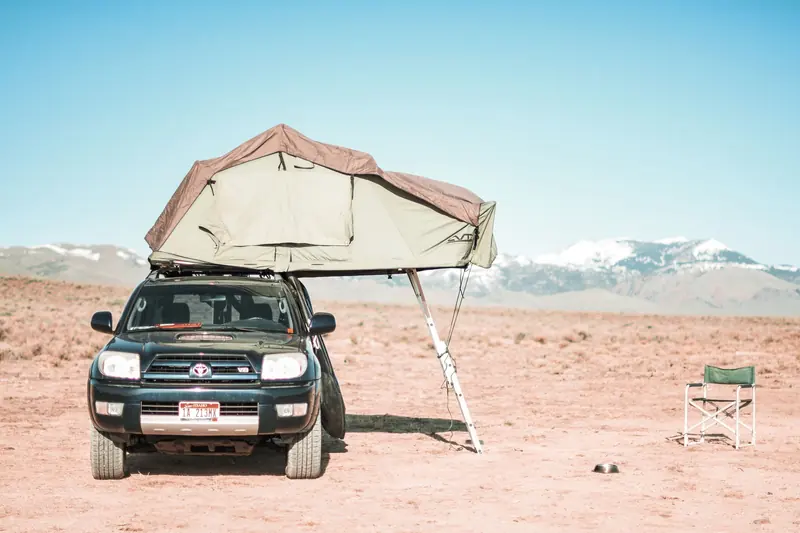
Dispersed camping sounds simple: find a patch of public land, park, and set up your tent. In practice there is no campground host, no marked site and no sign telling you what is allowed. You have to know the rules before you drive out, because nobody will explain them when you arrive.
This guide covers dispersed camping on land managed by the Bureau of Land Management (BLM). You will learn what the term means, the general rules the BLM publishes, how to find a place, and how to leave it as you found it. It is a good next step after a few nights in a developed campground, not a first-night plan.
One warning applies to every section: the BLM says its rules vary by state and field office. Use this article to know what to ask, then confirm the answers with the local BLM office for the area you picked.
What dispersed camping on BLM land means
The BLM calls camping on public lands away from developed recreation facilities “dispersed camping.” Most BLM land allows it, unless an area is posted “Closed to Camping” or is restricted for land use or conservation reasons. The land is meant for short-term recreation, not for living there.
Developed BLM campgrounds are a separate option. The BLM says they range from restrooms, water and electric hookups to very primitive sites. Some charge fees. Most sites are first-come, first-served, and some take reservations through Recreation.gov. If you want facilities, start there and read first-come, first-served vs. reserved campsites.
General rules from the BLM
The BLM camping page lists the rules below. Treat them as a starting list, not as the final word for your area.
| Topic | What the BLM page says | Your move |
|---|---|---|
| Stay limit | Generally 14 days within any 28-day period | Ask the local office for the limit in your area |
| Vehicles | Stay on designated roads and trails unless the area is designated for off-road vehicle use | Read signs and the BLM map |
| Distances | Recommended: within 150 feet (46 m) of designated routes, at least 200 feet (61 m) from water, more than 1 mile (1.6 km) from campgrounds, trailheads and picnic areas | Confirm with the field office |
| Permits | Most areas need none; some require permits for large groups or campfires | Ask before you go |
| Fire | Restrictions change through the year | Check the BLM fire restrictions page |
| Trash | Pack out all trash | Bring bags for the trip home |
The page also recommends using existing disturbed sites and fire rings or fire pans. That one habit prevents most new damage.
How to find a place to camp
Start with the BLM Visit page. It links to an interactive map of recreation opportunities and lets you browse by state or by activity, including camping. Detailed downloadable maps are on the BLM maps page. Local BLM offices can answer questions the website does not.
Then check who owns the land. The BLM safety page warns that BLM land often borders tribal, state or private land, and says to ask permission before entering private property. A pin on a phone map does not prove you are on public land.
Many BLM areas have limited or no cell service, according to the same page. Download your maps and permits for offline use and bring a paper map. Basic navigation for campers shows how to read one.
If you have used national forests, note that the Forest Service and the BLM are different agencies with different rules. Compare them in national forest camping.
Plan for a site with nothing provided
A dispersed site has no tap, no toilet and no trash can. Plan for each gap.
- Water. Bring all the drinking water you need. The BLM safety page notes that many areas have no refill points.
- Toilet. The BLM camping page says to use a portable toilet or pack out waste where possible, and that local rules differ.
- Trash. Pack out everything. Pack it in, pack it out covers trash and waste at camp.
- Roads. The BLM safety page says many roads are unpaved, rough or remote, and that some need high clearance or four-wheel drive. Its advice is to turn back if a road looks unsafe.
- Weather. Check the forecast before and during the trip. See how to read a weather forecast before you camp.
- Your plan. Tell someone where you will be and when you will return. Tell someone your plan gives a simple format.
This article does not cover safety or emergencies. For those, read the BLM Be Safe and Prepared page and contact the local office.
- The spot is on BLM land and is not posted “Closed to Camping.”
- You know the stay limit and the fire rule for the area.
- You have offline maps and a paper map.
- You carry all your water and a way to carry out trash and waste.
- Someone at home has your plan.
- You have a backup campground in case the area is full.
Respect the land
Public land survives heavy use only if campers leave little behind. The BLM asks campers to pack out trash, use existing sites and fire rings, and make sure fires are completely out before leaving. The National Park Service Leave No Trace page adds the wider habits, such as camping on durable surfaces and leaving rocks and plants where you found them.
Store food so animals cannot get it. Food storage at the campsite explains the basics, and the 7 Leave No Trace principles gives the full list.
Common mistakes
- Assuming public land means anything goes. Closures, fire rules and vehicle limits still apply.
- Trusting one rule for every state. The BLM says rules vary by state and field office.
- Camping on private or tribal land by accident. Check ownership before you set up.
- Driving a road that looks bad. Turn back when the road looks unsafe.
- Building a new fire ring. Use an existing one, or none if a fire restriction is in place.
- Leaving without a backup plan. A full or closed area is hard to fix with no signal.
Frequently asked questions
Is dispersed camping legal everywhere on BLM land?
No. Most BLM land allows it, but the BLM says areas can be closed to camping or restricted. Look for posted signs and ask the local office.
How long can you stay in one spot?
The BLM page says the stay limit is generally 14 days within any 28-day period, and that rules vary by state and field office. A first trip of one or two nights is far below that.
Do you need a permit?
Most areas do not need one, according to the BLM. Some require permits for large groups or campfires. Ask the local office.
Are there toilets or water?
Usually not. Plan to bring your own water and pack out trash and waste, as the BLM camping page describes.
Next step: choose your first dispersed spot
Pick one BLM area, read its page, and call or email the field office with your questions. Then add the stay limit, fire rule, road notes and backup campground to the Pitch & Pack planner.
Sources
Official pages used for this guide. Rules vary by place and change often, so check the page for your campground before you go.
- Camping on BLM-Managed Public Lands, Bureau of Land Management. Accessed November 6, 2026.
- Visit BLM Public Lands, Bureau of Land Management. Accessed November 6, 2026.
- Be Safe and Prepared, Bureau of Land Management. Accessed November 6, 2026.
- Fire Restrictions, Bureau of Land Management. Accessed November 6, 2026.
- Leave No Trace: Seven Principles, National Park Service. Accessed November 6, 2026.
Keep reading
Where to Camp
State Park Camping: Why It Is a Good First Choice
Why state parks suit a first trip, how three states run reservations differently, and what to check on your state's page.
Where to Camp
How to Reserve a Campsite on Recreation.gov
A plain walk-through of searching, filtering and booking a campsite on Recreation.gov, plus tips for busy campgrounds.
Where to Camp
Off-Season Camping: Fall, Winter and Spring Planning
How to plan camping outside summer: what may be closed, how to confirm it, and where to check the weather.