A Day at the Campground: Your Camp Routine From Morning to Night
How a camp day runs: morning chores, afternoon rest, evening fire care, posted quiet hours and check-out timing.
On this page
After the tent is up, a camping day settles into a loop of small jobs: water, breakfast, dishes, an activity, a rest, dinner, a fire, bed. The loop is easy once you know it, and the rules that shape it are mostly about time. Quiet hours, generator hours, check-out and fire care all run on the clock.
This article lays out the loop for a drive-up campground, from morning to night, and shows where posted rules cut into it. It is the routine for days two and beyond. The timeline of the very first evening is in what to expect on your first night. Times and numbers below come from example campgrounds, so read your own campground’s page for the real ones.
The day in four blocks
| Block | Typical jobs | Rule to check |
|---|---|---|
| Morning | Water, breakfast, dishes, pack a day bag | Generator hours; food storage |
| Midday and afternoon | Activity, rest, ranger program | Food secured when you leave the site |
| Evening | Dinner, cleanup, fire, lights | Fire rules; garbage disposal |
| Night | Sleep | Posted quiet hours |
Morning: water, breakfast, dishes
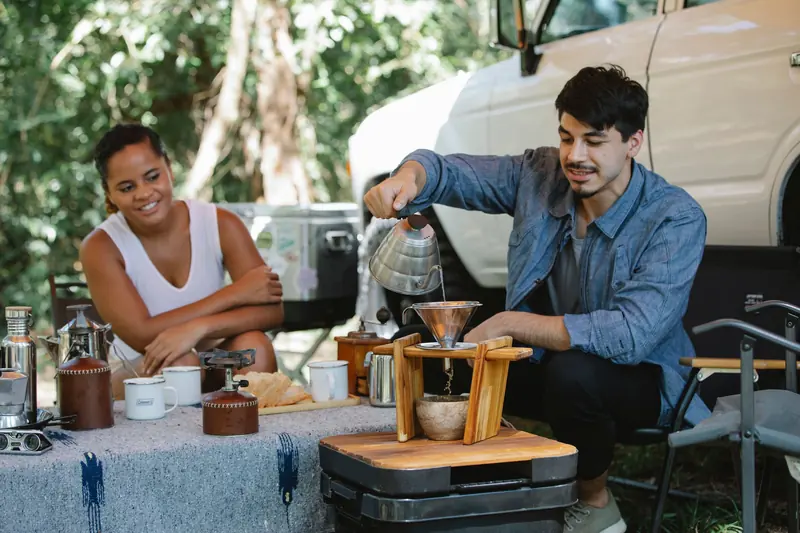
Fill the water jug early, because you need water for drinking, cooking and cleaning. The National Park Service (NPS) says one-pot meals are more efficient, which also means less to wash. NPS says to clean the area right after a meal to deter insects and animals, to wash dirty dishes right away, and never to leave food or liquid containers unattended in campgrounds. Food, trash and scented items go back into your storage at the end of each use, as the food storage guide explains, and cleaning up after camp meals covers the dish routine.
Morning noise has rules too. Generators are the common example. Yosemite National Park limits generator use to 7 to 9 a.m., noon to 2 p.m. and 5 to 7 p.m. Blue Ridge Parkway prohibits generators between 9 p.m. and 8 a.m. Zion’s South Campground and Lava Point Campground allow them only between 8 and 10 a.m. and between 6 and 8 p.m. These parks are examples. Many tent campers never use a generator, but the neighbors’ schedule becomes part of your day.
Midday and afternoon: activity and rest
Plan one main activity and one quiet block. NPS says the group should have activities that suit everyone, plus quiet time off your feet, and notes that a full day of camping can tire adults. Frontcountry campgrounds may have amphitheaters for ranger programs, and some parks lend activity packs; ask at the visitor center. NPS also says to obey speed limits on loop roads and watch for children on bikes and people walking.
When you leave the site, secure the food. NPS says to keep food organized and contained, and to store it away from rodents and other wildlife. Some parks allow a closed vehicle during the day, and others require a food locker. Rules differ, so confirm yours. See wildlife at the campsite for the official guidance.
Evening: dinner, fire and lights
Cook, eat and clean up before dark when you can. In a frontcountry campground, NPS says to put garbage in the campsite dumpster each night and wash your dishes. Then secure food and scented items again. NPS says not to keep food in your tent.
If fires are allowed, keep tents and flammable objects at least 15 feet (4.6 m) away. NPS says never to leave a campfire unattended and to keep water nearby. Smokey Bear offers a four-step finish: drown the fire with water until the hissing stops, stir the embers, drown again, and feel the ashes with the back of your hand. The saying is “if it’s too hot to touch, it’s too hot to leave.” Details are in how to build and put out a campfire.
For lights, NPS suggests keeping them shielded and aimed downward, and turning them off entirely to see the night sky. The camp lighting guide covers the options.
Quiet hours, check-in and check-out
NPS says quiet hours are usually posted and often span a set window such as 10 p.m. to 6 a.m., and that courtesy does not end when they do. Yosemite lists 10 p.m. to 6 a.m., Blue Ridge Parkway lists the same, and Zion lists 10 p.m. to 8 a.m. The quiet hours article goes further.
Check-in and check-out are also set by the campground. NPS says a campsite has a check-out time, like a hotel room, and that procedures vary, so ask the campground. Examples:
- Yosemite: check-in and check-out are both at noon. If you have not checked in before 10 a.m. the morning after your first night, the reservation is cancelled.
- Zion: check-in is any time after 12 p.m. Mountain Standard Time, and check-out is 11 a.m.
- A national forest listing on Recreation.gov: no check-in or check-out time was listed, gates open at 7 a.m. and close at 10 p.m., and reserved sites are held until noon the day after the scheduled arrival.
At a frontcountry campground, a card or paper clipped to a post may show the current occupant’s check-out date, and NPS says to leave an occupancy tag in place. On your last morning, leave your site better than you found it, make sure the fire is out, and use the garbage disposal the campground provides. The clean, dry and store guide covers what to do with wet gear at home.
Common mistakes
- Leaving food on the table when you walk away. Secure it every time.
- Running noise equipment at the wrong hour. Check generator hours and quiet hours when you arrive.
- Packing the day too full. Leave a quiet block each afternoon.
- Treating the fire as done when the flames are gone. Follow the drown, stir, drown, feel steps.
- Missing check-out because of a slow breakfast. Work backward from the posted time.
- Missing late-arrival rules. Some parks cancel reservations that are not checked in on time.
Frequently asked questions
What time is check-out at a campground?
It is posted by each campground. Yosemite uses noon, and Zion uses 11 a.m. NPS says to ask the campground about the check-out procedure for your site.
When are quiet hours?
They vary by place. NPS says they often span a window such as 10 p.m. to 6 a.m., and some parks differ. Check the posted hours when you arrive.
How should you handle trash each day?
In a frontcountry campground, NPS says to put garbage in the campsite dumpster each night. In the backcountry, you pack out all your trash. The pack it in, pack it out article has more.
Can you arrive late at night?
Check the campground’s rules first. One example listing shows gates that close at 10 p.m., and Yosemite cancels reservations that miss the morning check-in deadline.
Next step: draft your own day
Write a one-page schedule using your campground’s posted times, then build the matching list in the Planner. Next, read how many nights your first trip should be to see how many of these days to book.
Sources
Official pages used for this guide. Rules vary by place and change often, so check the page for your campground before you go.
- Camp Etiquette, National Park Service. Accessed November 6, 2026.
- Checking Out, National Park Service. Accessed November 6, 2026.
- Frontcountry Camping, National Park Service. Accessed November 6, 2026.
- Cooking in Camp, National Park Service. Accessed November 6, 2026.
- Food and Scented Item Storage at Campgrounds, National Park Service. Accessed November 6, 2026.
- What to Bring, National Park Service. Accessed November 6, 2026.
- Camping With Kids, National Park Service. Accessed November 6, 2026.
- Campfires, National Park Service. Accessed November 6, 2026.
- Smokey Bear: Campfire Safety, USDA Forest Service. Accessed November 6, 2026.
- Finding and Setting Up a Campsite, National Park Service. Accessed November 6, 2026.
- Campground Rules (example park), National Park Service, Yosemite National Park. Accessed November 6, 2026.
- Camping Regulations (example park), National Park Service, Zion National Park. Accessed November 6, 2026.
- Campground Regulations (example park), National Park Service, Blue Ridge Parkway. Accessed November 6, 2026.
- Christmas Meadows Campground (example listing), Recreation.gov. Accessed November 6, 2026.
Keep reading
Camping Basics
How Many Nights Should Your First Camping Trip Be?
One, two or three nights? Use distance, weather, experience, kids and booking rules to choose the length of your first trip.
Camping Basics
Backyard Camping: A Practice Run Before Your First Trip
Use one night in the yard to test the tent, stove and sleep setup, and learn what only a real campground can teach you.
Camping Basics
How to Plan Your First Camping Trip
Plan your first camping trip in order: trip type, place, dates, rules, forecast, then a checklist you can tick off.